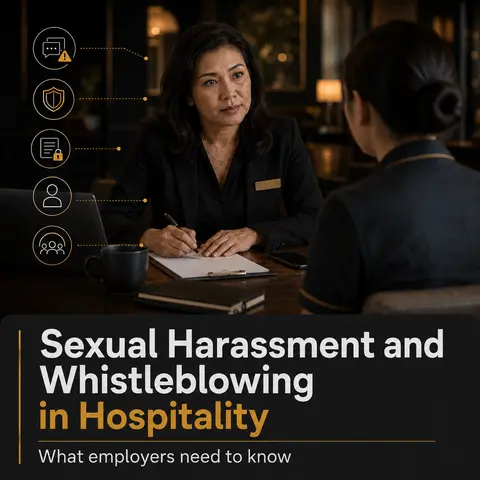
Sexual Harassment and Whistleblowing in Hospitality: What Employers Need to Know
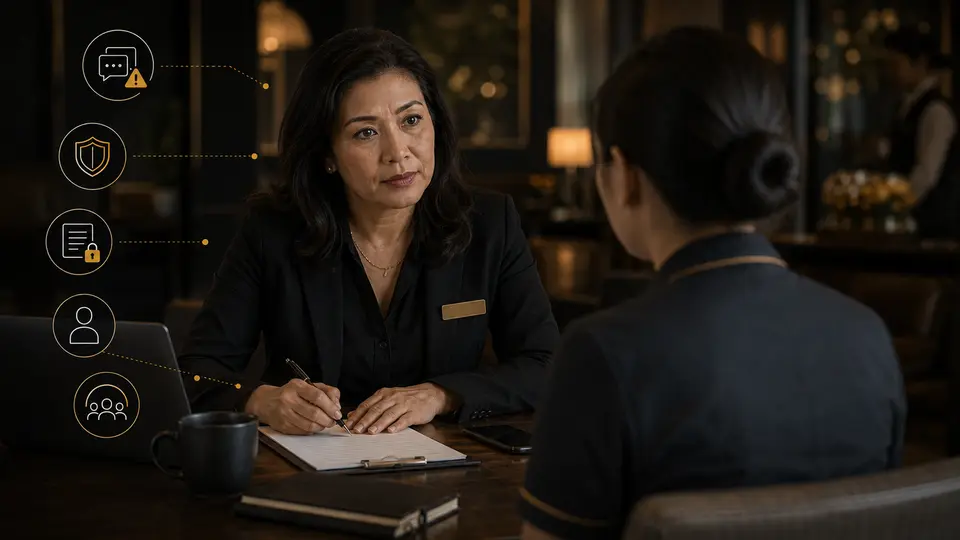 In a busy hospitality workplace, where does “banter” end and responsibility begin?
And, more importantly, would your team know where to raise a concern safely?
That question matters in a pub, restaurant, hotel, events venue or late-night bar because hospitality often combines alcohol, pressure, informal cultures, customer contact, power differences and long working hours. A comment that someone dismisses as “just a laugh” can land very differently when it comes from a manager, a regular customer or a colleague who controls the rota.
The legal position is also changing.
From 6 April 2026, sexual harassment is expressly included as a qualifying whistleblowing disclosure under the Employment Rights Act 2025. Where the relevant legal conditions are met, workers who raise concerns can be protected from detriment, while employees can be protected from unfair dismissal.
That does not mean every complaint automatically becomes whistleblowing. It does mean hospitality leaders need to understand the difference : and make it easier for people to speak up before a problem becomes a pattern.
Why hospitality workplaces can carry particular risk
Hospitality is not uniquely bad at this. But the operating model can create more opportunities for poor behaviour to go unchallenged.
Think about:
- Late finishes, lone working and closing duties.
- Alcohol at work, staff parties and customer intoxication.
- Housekeeping, room service and other roles carried out away from colleagues.
- Regular contact with guests, suppliers, contractors and members of the public.
- Junior team members relying on managers for shifts, tips, references and progression.
- Casual, temporary and agency workers who may not feel secure enough to complain.
- Informal workplace cultures where “that’s just how we speak” becomes a shield for unacceptable conduct.
The risk is not only the obvious incident. It can also be the accumulated effect of sexual comments, unwanted touching, messages, jokes about someone’s body, pressure after work, or customers being allowed to behave badly because they spend money.
The Morning Advertiser’s coverage of “pub banter” captured some of the industry debate. But the practical point is simple: hospitality does not need to become humourless. It does need to stop treating “banter” as a magic word that removes responsibility.
Banter, harassment, bullying, grievances and whistleblowing: what is the difference?
These terms often get thrown into the same bucket. They are not the same thing.
Banter
Banter is usually described as light-hearted teasing or joking between people. But whether behaviour is genuinely welcome depends on the people, the power dynamic and the context.
If someone goes quiet, moves away, asks for it to stop or looks uncomfortable, the answer is not, “They need to toughen up.” The answer is to stop and check in.
As Acas explains, behaviour that some people consider joking or part of workplace culture can still be sexual harassment.
Sexual harassment
Under the Equality Act 2010 framework, sexual harassment is unwanted behaviour of a sexual nature that violates someone’s dignity or creates an intimidating, hostile, degrading, humiliating or offensive environment.
It can be a one-off incident or a repeated pattern. Intention is not the whole test. Someone may say they were joking, but the effect and circumstances still matter.
Bullying
Bullying is not generally a standalone legal claim in the same way as harassment under discrimination law. It can involve repeated unreasonable behaviour, intimidation or abuse of power. It may overlap with harassment, victimisation or a breach of the employer’s duty of care.
A manager cutting someone’s shifts after they raise a concern could be bullying, detriment, victimisation or more than one of these things, depending on the facts.
A grievance
A grievance is normally an employee’s formal complaint about something affecting them personally : perhaps their treatment by a manager, a workplace decision or an incident involving a colleague or customer.
A sexual-harassment complaint can be handled through a grievance process. That does not automatically make it whistleblowing.
Whistleblowing
Whistleblowing at work is about reporting information concerning wrongdoing in the public interest. The concern may affect other workers, customers or the wider public, rather than only the person making the report.
From 6 April 2026, sexual harassment is expressly one of the categories that can form the subject of a qualifying disclosure.
The worker must still reasonably believe that:
- The disclosure concerns qualifying wrongdoing.
- The disclosure is in the public interest.
- It is made through an appropriate channel.
So, a purely personal disagreement may be a grievance rather than whistleblowing. A report that a venue repeatedly ignores sexual harassment by customers, puts staff at risk and punishes anyone who complains may be more likely to raise whistleblowing issues.
The legal label is not something a duty manager should try to determine over the pass. Take the concern seriously first. Work out the correct process with HR or appropriate advice afterwards.

What the 6 April 2026 change means
The Department for Business and Trade factsheet confirms that the Employment Rights Act 2025 adds sexual harassment to the wrongdoing categories under section 43B of the Employment Rights Act 1996.
That gives greater clarity. Previously, a worker might have needed to argue that a sexual-harassment disclosure fitted another category, such as a danger to health and safety or breach of a legal obligation.
Now, a worker raising a qualifying disclosure about sexual harassment may be protected from detriment. Examples of detriment could include:
- Unexplained reductions in hours or shifts.
- Being moved to worse sections or less favourable duties.
- Bullying or hostility from managers.
- Being excluded from training or promotion.
- Being labelled a troublemaker.
- Dismissal, where the person is an employee.
The protection can apply to disclosures about something that happened in the past, is happening now or is likely to happen in the future.
However, not every complaint automatically qualifies for statutory whistleblowing protection. The public-interest and appropriate-channel requirements still matter. Workers should seek advice where needed, particularly before resigning or making an external disclosure.
The GOV.UK guidance for employers is clear that whistleblowing law applies only when the legal conditions are met. It also makes clear that employers should handle disclosures promptly, keep information confidential where possible and document how they responded.
What workers need to know
Your team should not need to memorise employment law before they can raise a concern.
They should know:
- Who they can speak to on shift.
- Who they can contact outside normal hours.
- How to contact HR, an owner or an independent reporting service.
- Whether anonymous reporting is available.
- What will happen after they report.
- That information will be shared only with people who need to know.
- That retaliation is unacceptable.
- Where they can get independent support, such as Acas, Protect or a trade union.
Confidential and anonymous are not the same. A confidential report identifies the person but limits who can access the information. An anonymous report does not identify the person, although it may be harder to investigate or follow up.
Make those distinctions clear. False promises about “complete confidentiality” can damage trust later.
What employers should do before a report
A policy hidden in a handbook is not a prevention strategy. It is paperwork waiting for a difficult conversation.
The EHRC’s employer guidance points employers towards a practical, risk-based approach. That includes:
1. Assess the actual risks
Do not copy and paste a generic risk assessment. Look at your operation.
Where are people working alone? Which shifts finish after public transport stops? Are team members expected to serve intoxicated customers without support? Do staff parties create pressure or blurred boundaries? Are junior employees dependent on one manager for hours?
Ask staff what they see and experience. Use one-to-ones, surveys, exit interviews and team discussions.
2. Make policies usable
Your anti-harassment and whistleblowing policies should explain:
- What sexual harassment can look like.
- That customer and third-party behaviour matters.
- How to report formally or informally.
- What support is available.
- How investigations will work.
- That victimisation and retaliation will not be tolerated.
Then put the information where people actually work: staff rooms, onboarding, team apps, manager briefings and pre-shift conversations.
3. Provide multiple reporting routes
One reporting route is fragile. What if the concern is about the general manager?
Offer more than one option: a line manager, HR, a senior leader, an independent hotline, a named safeguarding contact or an anonymous channel. Make sure agency, casual and temporary workers can access the same information.
4. Train managers, not just staff
Managers need to recognise a disclosure and respond without making things worse. They need to know when to escalate, how to record facts and how to prevent changes to shifts being perceived as punishment.
The Business Growth Service guidance recommends updating policies, briefing managers and communicating the new protection to workers.
5. Set boundaries with third parties
The government’s guidance on reasonable steps explains that the duty is anticipatory: employers should act before harassment occurs.
The Act is also expected to strengthen the position on third-party harassment from October 2026. For hospitality, that means taking customer behaviour seriously, considering high-risk roles and having practical escalation options : refusing service, moving a staff member, involving security or ending a booking where appropriate.
This is not about policing every conversation. It is about not leaving workers alone to manage predictable risks.

When someone raises a concern: listen, protect, document
The first response can shape everything that follows.
A manager does not need to promise an outcome. They do need to create safety and confidence.
Useful phrases include:
- “Thank you for telling me. I’m taking this seriously.”
- “What do you need right now to feel safe at work?”
- “I’ll explain who needs to know and why.”
- “You do not need to prove everything before we look into it.”
- “I’m going to record what you’ve told me accurately.”
- “We will keep an eye on your shifts and working relationships so you are not treated badly for raising this.”
- “I cannot promise a particular outcome, but I can promise that we will follow the process fairly.”
Then:
- Listen without cross-examining.
- Check immediate safety and welfare.
- Consider temporary protective measures.
- Record dates, words, witnesses and actions accurately.
- Get HR or appropriate support involved.
- Investigate fairly, without assuming guilt or dismissing the concern.
- Keep the person updated within sensible confidentiality limits.
- Monitor for retaliation afterwards.
If an investigation does not substantiate a report, that does not automatically mean the person acted maliciously. Hospitality leaders need to hold that line carefully. A fair process is not the same as a process designed to make the complaint disappear.
A venue-level action checklist
Use this in your next leadership meeting:
- Review the anti-harassment and whistleblowing policies.
- Add sexual harassment as a qualifying whistleblowing disclosure.
- Include customers, guests, contractors and suppliers.
- Map reporting routes and test whether they work outside office hours.
- Complete a venue-specific sexual-harassment risk assessment.
- Brief every manager on listening, recording and escalation.
- Train staff on intervention and customer boundaries.
- Review lone working, closing shifts and staff transport.
- Track concerns, patterns and outcomes confidentially.
- Review whether anyone experienced detriment after reporting.
- Revisit the controls after every incident and at regular intervals.
This is about leadership, not just compliance
The Morning Advertiser’s April 2026 update on changes affecting pubs rightly places the whistleblowing reform in the context of wider operational pressure.
But good prevention is not an optional extra to bolt on when the budget improves. It is part of hospitality leadership.
People stay where they trust the systems, the managers and the culture. They leave when every shift feels like a gamble, when speaking up costs them hours, or when leaders protect revenue and reputation before people.
That directly affects hospitality staff retention, employer brand, guest experience and the quality of leadership coming through the business.
A safe culture is not one where nobody complains. It is one where people can raise concerns early, managers respond properly and the organisation learns before the same behaviour spreads through the rota.
That is the standard worth aiming for.
> General information disclaimer: This article is for general information only and is not legal advice. Employment law can depend on the specific facts, contractual arrangements, location and timing. Employers and workers should consult up-to-date GOV.UK, Acas, EHRC guidance or a qualified employment adviser about individual circumstances. The whistleblowing provisions discussed apply to Great Britain; employment law is different in Northern Ireland.
Further reading
- GOV.UK: Whistleblowing guidance for employers
- DBT: Strengthening protections for whistleblowers factsheet
- DBT: Preventing workplace sexual harassment and reasonable steps
- Business Growth Service: Whistleblowing protections
- Acas: What someone can whistleblow about
- Morning Advertiser: Key changes impacting pubs in April
- Morning Advertiser: What is the furore over “pub banter”?
- Talking Hospitality: What does HR really do in hospitality?
- Talking Hospitality: What does EDI really mean in practice?

Tipping Law in 2026: Is Your Hospitality Business Getting It Right?