Tipping Law in 2026: Is Your Hospitality Business Getting It Right?
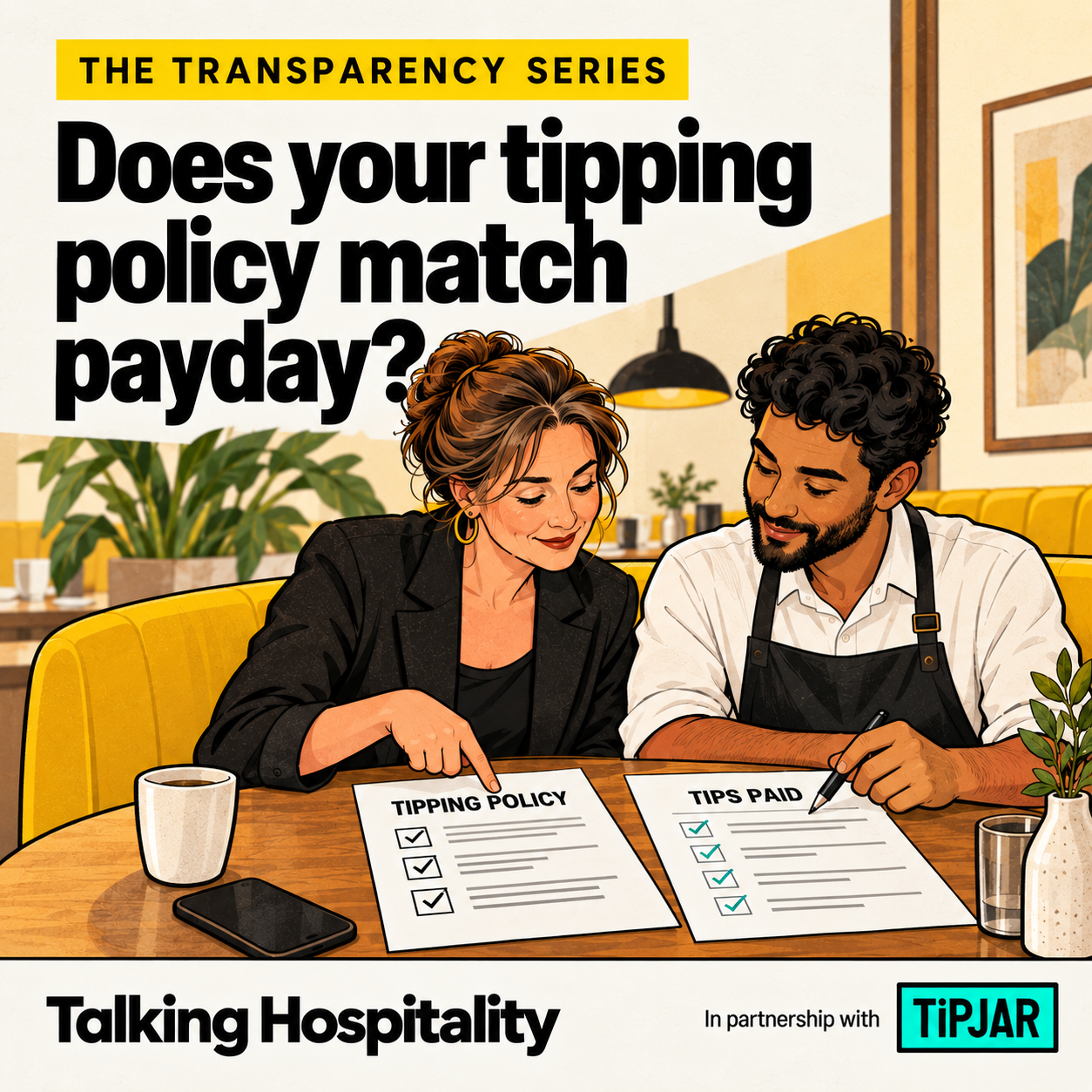
You can put a tipping policy in the staff handbook, explain it at induction and ask everyone to sign it. There can still be a problem with what it says.
That came up in our Talking Hospitality episode, What does “Transparency” mean in Hospitality?. Dan Hawkie, Chief Commercial Officer at TiPJAR, described policies that openly told workers that breakages would be taken from their tips. The businesses had written down what they were doing. That did not make the practice acceptable.[1]
It is worth taking your own policy out and looking at what actually happens on payday. If it was last checked two years ago, a few things may have changed since then.
What should already be happening?
The Employment (Allocation of Tips) Act 2023 framework took effect on 1 October 2024. It covers qualifying tips and service charges, including money received by the employer and certain worker-received tips over which the employer exercises control.[2]
The payment method alone does not settle whether a tip is covered. Cash is not automatically outside the rules, and using an app does not automatically remove employer responsibilities.[2]
For those qualifying tips, you need to:
Pass the money to workers without business deductions, allowing only lawful deductions such as applicable tax and National Insurance.
Allocate it fairly and transparently.
Pay workers no later than the end of the following month. A qualifying tip received in October must therefore be paid by 30 November.[3]
Where qualifying tips arise more than occasionally and exceptionally, the written-policy and record-keeping duties also apply.[2]
So take a look at what leaves the pot before anyone gets paid. Card-processing charges, breakages and till shortages should not quietly become workers’ costs through deductions from qualifying tips. Writing the deduction into the handbook does not make it lawful.
And what about the changes still to come?
TiPJAR’s resource on further tipping-law changes is a useful starting point, but its opening notice explains that it discusses a draft revised Code which was subsequently withdrawn.[4]
As checked on 6 October 2026, Acas says the additional consultation duties have not yet taken effect and are expected by the end of 2026. These include consulting before creating or reviewing a tipping policy, sharing an anonymised summary of feedback, and reviewing the policy at least every three years.[3]
The Government’s revised-Code page still directs employers to the existing Code. A further consultation was published in August and is now closed.[5][6] A law can be passed before all of its provisions take effect. The dates matter here.
Consulting your team is already recommended under the existing Code.[2] Our earlier blog, October Tipping Changes: Why Worker Involvement Matters, explores the practical value of that involvement. Read its implementation discussion alongside the current official sources linked here.
Follow one payment through your business
You do not have to start with a lengthy meeting. Sit down with whoever looks after your tips and tronc, and choose one completed payment period.
How much came in? How was it divided? What was paid out? Follow the money through and compare what happened with the policy your team has been given.
If the figures do not match, work out why. You might be looking at different reporting periods, or there may be an error to put right. “The system does it” will not tell you which.
Then check whether every role that should be considered has been considered. Government guidance specifically warns against overlooking agency workers simply because of how they are engaged.[7] A busy events operation can have an accurate permanent-staff list and still miss part of the workforce.
Agree who will keep an eye on changes and update the policy. Otherwise, it is very easy for payroll to think HR has it covered, while HR thinks exactly the same about payroll.
Put your own policy to the test
If your review raises questions, find out how TiPJAR approaches tipping and tronc, and discuss your arrangements with its team. Take your existing policy and a sample payment period so the discussion starts with your operation.
Listen to the episode for Dan and Joe McDonnell’s discussion of money and tipping, from around 10 minutes. Joe’s recollection of losing tips to cover a till shortage makes the point rather well: people remember what happened to their money long after the manager has moved on.[1]
Part of Talking Hospitality’s transparency series, produced in partnership with TiPJAR. Legal position checked on 6 October 2026; England, Scotland and Wales.
References
[1] Talking Hospitality, episode transcript, 10:09–12:40. Episode: https://www.talkinghospitality.com/transparency/
[2] GOV.UK, Code of practice on fair and transparent distribution of tips, particularly scope, fairness and transparency: https://www.gov.uk/government/publications/distributing-tips-fairly-statutory-code-of-practice/code-of-practice-on-fair-and-transparent-distribution-of-tips-html-version
[3] Acas, What the law says: https://www.acas.org.uk/tips-and-service-charges
[4] TiPJAR, Tipping Law is Changing Again!, including its draft-status notice: https://www.wearetipjar.com/tipping-law-is-changing-again/
[5] GOV.UK, revised statutory Code and withdrawal notice: https://www.gov.uk/government/publications/distributing-tips-fairly-revised-statutory-code-of-practice
[6] GOV.UK, August 2026 consultation on the revised Code: https://www.gov.uk/government/consultations/make-work-pay-revised-tipping-code-of-practice
[7] GOV.UK, non-statutory guidance, agency workers: https://www.gov.uk/government/publications/distributing-tips-fairly-non-statutory-guidance-for-employers/distributing-tips-fairly-non-statutory-guidance-for-employers
7 Mistakes You're Making with Hospitality Staff Retention (and How to Fix Them)