The Conversations Hospitality Needs Next
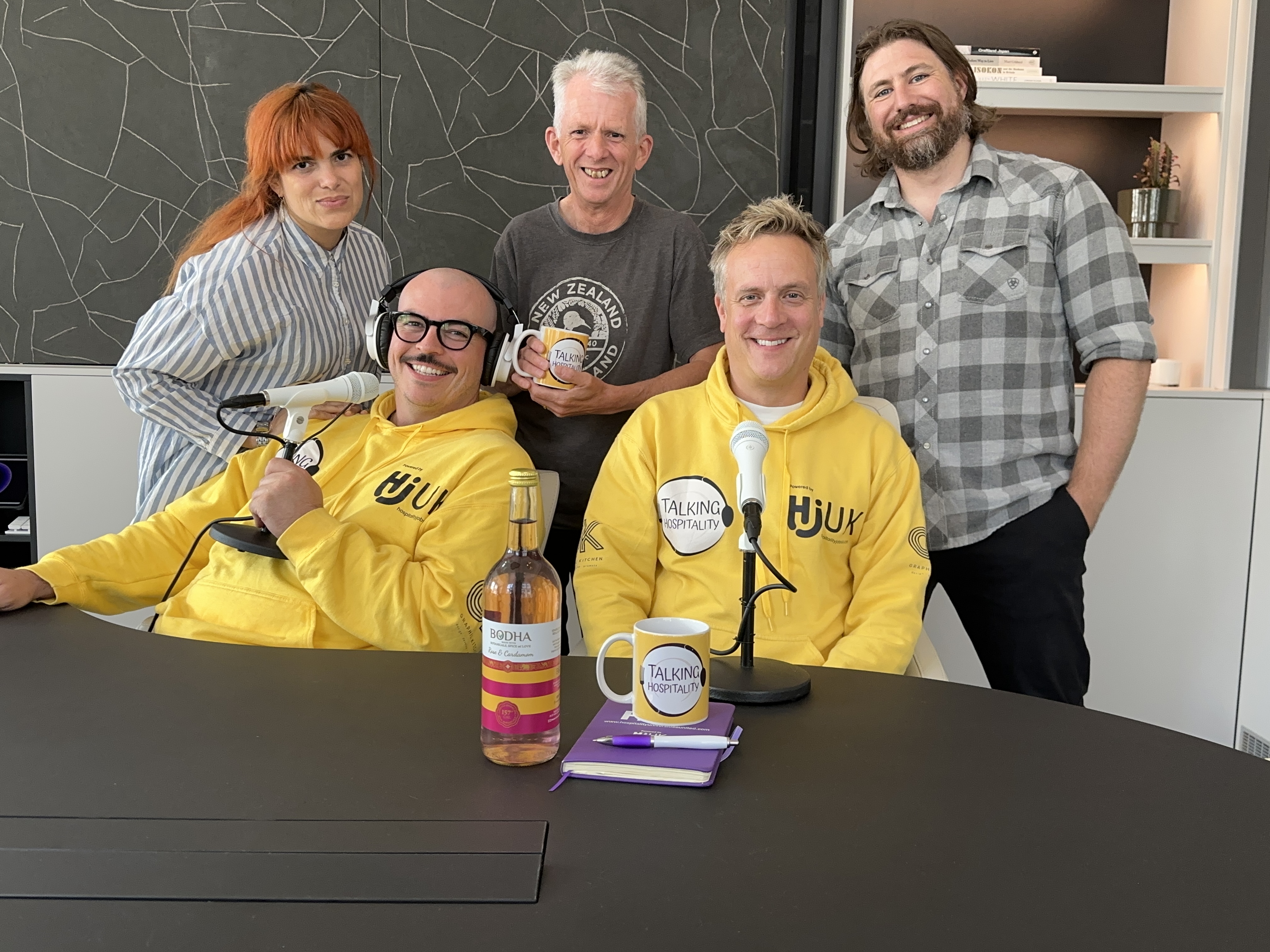

A new series of episodes from Talking Hospitality.
Hospitality does not need more noise.
There is already plenty of it. More opinions. More hot takes. More posts telling us what the industry must do next, usually in six steps, three hacks or one very confident sentence.
What hospitality needs is better conversation.
The kind that makes space for experience, uncertainty and a bit of honest challenge. The kind that asks what is really happening inside our businesses, not just what looks good on a presentation slide. The kind that leaves you thinking differently , and perhaps gives you something useful to try on your next shift, in your next team meeting or during the next difficult decision.
That is where Talking Hospitality comes in.
On 9th September 2026, we are welcoming returning listeners back and introducing new listeners to a new series of episodes from Talking Hospitality: a UK hospitality podcast and wider media and insight platform for people who care about where the industry goes next.
Welcome back , and welcome in
If you have listened before, you will know that Talking Hospitality is built around real conversations with people who understand the industry from the inside.
The podcast is hosted by Timothy R Andrews, Tracey Rashid and Joe McDonnell, bringing different experiences, perspectives and questions to discussions about the issues shaping hospitality.
If you are new to the podcast, welcome. You do not need to know where to begin, and you certainly do not need to listen in chronological order. Hospitality is not a tidy timeline. It is a live operation: constantly moving, occasionally chaotic and always full of people trying to make good decisions with imperfect information.
You can start with the New to the Podcast? Try These 6 As Starters page, which offers a useful introduction to the show and the range of conversations we explore.
You might hear a discussion about recruitment, then find yourself thinking about leadership. You might arrive looking for a conversation about technology and leave considering how your team learns, communicates or feels at work.
That is the point. The issues are connected.
Why honest conversations matter now
Hospitality leaders are making decisions in a difficult environment. Costs remain under pressure. Recruitment and retention continue to test businesses of every size. Teams are working through change while still trying to deliver consistent guest experiences. Technology is developing quickly, but not every new tool solves a real problem. And behind all of that are people , managers, operators, chefs, front-of-house teams, suppliers, business owners and support functions , carrying the weight of the day-to-day.
It is tempting to look for simple answers.
Hire better people. Improve culture. Embrace technology. Prioritise wellbeing. Become more sustainable.
Yes, absolutely. But how?
What does “better culture” look like at 4pm on a Friday when the rota is short and the bookings are building? What does supportive leadership sound like when a team member has made a mistake? How do you retain good people when another employer can offer more money, more flexibility or simply a manager who pays attention?
These are not abstract questions. They show up in rotas, handovers, one-to-ones, training sessions, payroll conversations and the way a manager says hello at the start of a shift.
They also show up in the decisions we get wrong.
Most of us have made mistakes at work. We have promoted people before they were ready, avoided difficult conversations, relied too heavily on a process that was not working or convinced ourselves that a problem would disappear if we stayed busy enough.
It usually does not.
A useful hospitality podcast should not pretend that leadership is effortless or that every operator has a perfect answer. It should help us examine what happened, what we learned and what we might do differently next time.
Right. That is the conversation we want to keep having.

The questions we will keep exploring
This new series of episodes will continue to focus on the practical issues facing hospitality leaders, operators and teams.
How do we build stronger teams?
Strong teams are not created by slogans on a wall. They are built through clarity, trust, fair expectations and consistent behaviour.
That means asking whether people understand what good looks like. Whether managers have time to coach. Whether new starters feel included or simply thrown into the deep end. Whether experienced team members are given the opportunity to share what they know.
We will keep looking at the everyday choices that help teams work better together : not just the big initiatives that get announced once and forgotten.
How do we retain good people?
Retention is often discussed as though it is a clever recruitment strategy. It is more basic than that.
People stay when they feel respected, supported and able to grow. They stay when work fits into a life, when feedback is useful rather than personal, and when leadership is visible in the moments that matter.
That does not mean every job can offer everything to everyone. It does mean businesses need to be honest about what they offer and thoughtful about the experience they create.
If we want people to build careers in hospitality, we have to give them reasons to imagine a future here.
How do we lead through change?
Change is no longer an occasional project. It is part of the operating environment.
Businesses are adapting to new expectations from guests, employees, regulators, suppliers and communities. Leaders are being asked to manage commercial pressure while keeping teams engaged and focused.
That can feel like trying to change the tyres while the car is moving.
The answer is not to communicate more for the sake of it. It is to communicate clearly, involve the people affected and explain why a change matters. We will explore what that looks like in practice, including the uncertainty, resistance and occasional wrong turns that come with it.
How should we use technology?
Technology can remove friction. It can improve access to information, support learning, strengthen communication and help businesses make better decisions.
But technology is not automatically progress.
A new system that nobody understands is not an improvement. An automated process that makes a team’s working day more stressful is not a solution. A dashboard full of numbers is not useful if leaders cannot connect those numbers to what is happening on the floor.
The question is not simply, “What can this technology do?”
It is, “What problem are we trying to solve, and will this make life better for our people and our guests?”

How do we support wellbeing properly?
Wellbeing cannot be reduced to a poster, a discount or a single awareness day.
It is shaped by workload, scheduling, management behaviour, psychological safety, financial pressure and whether people feel able to speak honestly when something is not right.
That does not mean managers can solve every problem. It does mean businesses can create better conditions for people to ask for help, recover properly and work without feeling that exhaustion is a badge of honour.
We will continue to explore wellbeing as part of leadership and operations : because the experience of the team and the experience of the guest are not separate worlds.
What does a more sustainable future look like?
The future of hospitality will depend on more than survival.
We need businesses that can remain commercially viable while treating people fairly, using resources responsibly and contributing positively to the communities around them.
That raises difficult questions about growth, margins, supply chains, skills, ownership, technology and purpose. There will not be one model that works everywhere. An independent café, a hotel group, a pub business and a contract catering operation will all face different realities.
But we can learn from one another.
That is why the conversation matters.
Learning from people who have actually lived it
Talking Hospitality is not built around distant commentary. It is built around people with stories, scars, experience and practical knowledge.
The most valuable insight often comes from someone explaining what happened when the plan met reality. A leader describing the decision they would not make again. An operator sharing how a team recovered from a difficult period. A people professional challenging a policy that looks sensible on paper but fails in practice.
There is real value in hearing the unfinished version of the story.
The part where someone was unsure. The moment they got it wrong. The career struggle they did not expect. The conversation they put off. The small behaviour that made a bigger difference than the expensive initiative.
Those stories help us recognise our own situations. They remind us that good leadership is not about appearing invulnerable. It is about staying curious, taking responsibility and being willing to improve.

Join the conversation
Whether you are running a venue, leading a people function, building a hospitality business, supplying the sector or developing future talent, we would love you to listen.
You can find out more through the Talking Hospitality homepage, explore the podcast archive and follow the show on Apple Podcasts or Amazon Music.
If a conversation helps you, share it with a colleague. Send it to the manager who is trying to build a stronger team. Pass it on to someone considering a career in hospitality. And if there is a question you think we should explore, let us know.
What should we be asking?
Who needs to be part of the discussion?
Where are we still pretending that something works when it plainly does not?
The best conversations rarely finish when the recording ends. They continue in team meetings, on the walk home, over coffee and during the next shift.
That is what we hope this new series of episodes will do.
Not add to the noise, but create space for clearer thinking. Not offer easy answers, but help us ask better questions. Not talk about hospitality from a distance, but move the conversation forward from inside the industry.
Because the future of hospitality will not be built by one voice.
It will be built by all of us thinking better, leading better and building better : together.
Talking Hospitality: Moving The Hospitality Conversation Forward.
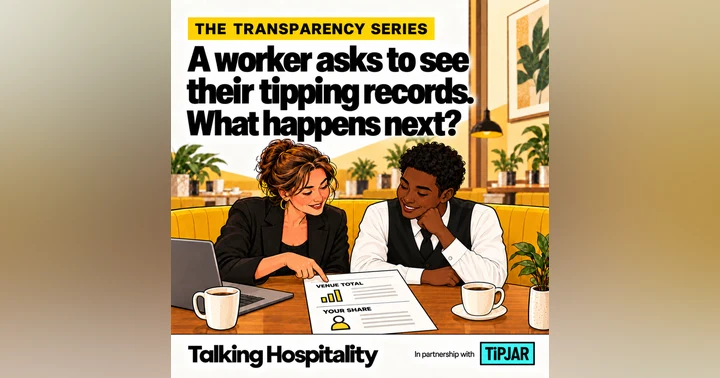
A Worker Asks to See Their Tipping Records. What Happens Next?