Can Businesses Really Be A Force For Good?

 Apple Podcasts
 Spotify
 YouTube
 Audible
 RSS Feed
 Amazon Music
 Spreaker
 Castro
 What if hospitality businesses could do more than just make profit?
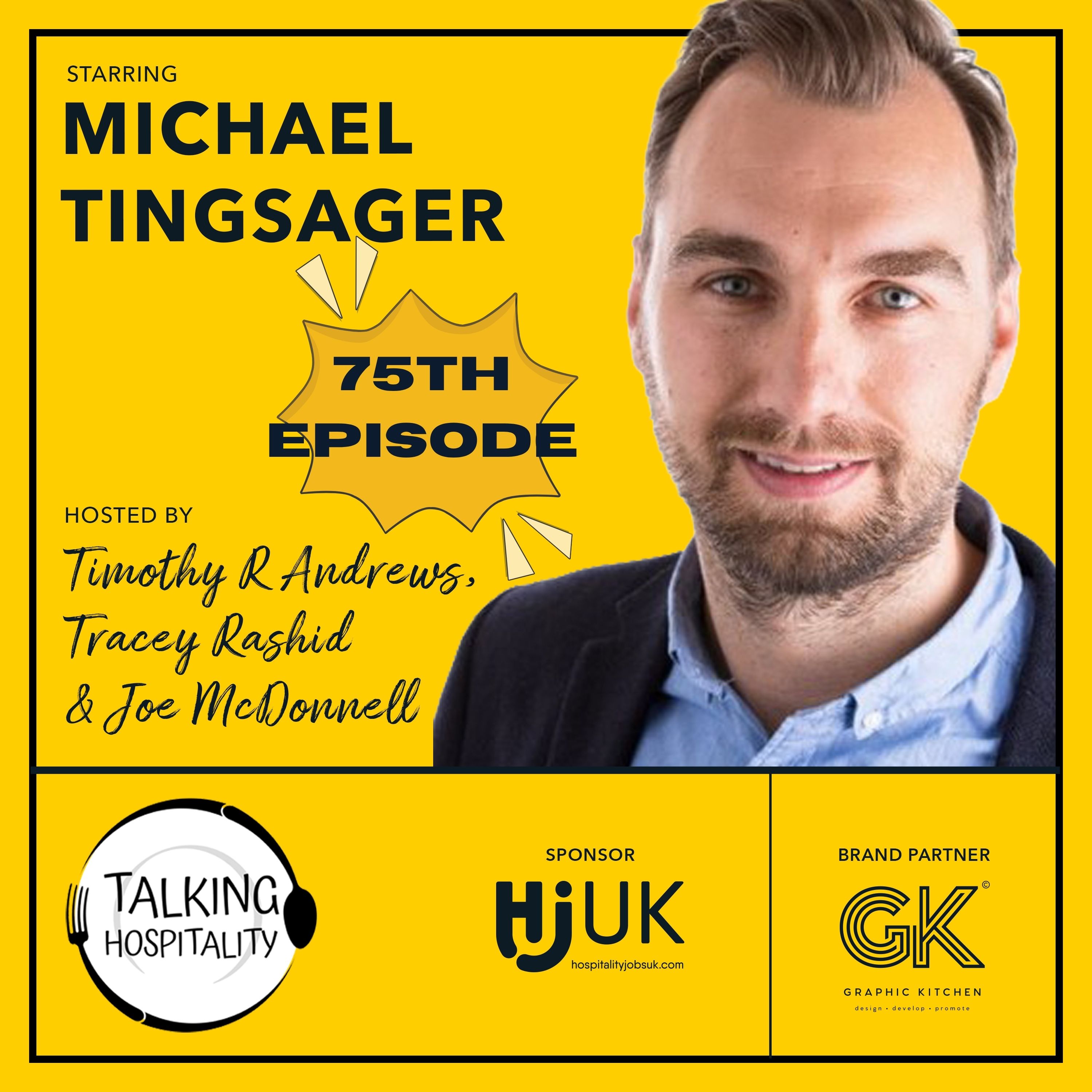
In this season finale of Talking Hospitality, we’re joined by Michael Tingsager, founder of Hospitality Mavericks, to explore a bigger question facing the industry — can businesses genuinely be a force for good, or is that just talk?
Drawing on real examples and his “seven tenets” framework, Michael breaks down how the most progressive hospitality brands are building strong cultures, making better decisions, and creating long-term impact — not just short-term success.
This conversation goes beyond trends. It challenges how you think about leadership, culture, and responsibility in hospitality today.
Because if we’re honest… the industry doesn’t just need better operators. It needs better thinking.
And that starts here.
🔥 Key Takeaways
- Profit and purpose aren’t opposites — they rely on each other
- Culture isn’t a “nice to have” — it’s the engine of performance
- You can’t copy great businesses — you have to build your own model
- Clarity of purpose is the foundation of every successful organisation
- Frontline empowerment drives better customer experience
- Long-term thinking beats short-term wins every time
Contact Us: hey@talkinghospitality.com
Links to References in Episode:
Talking Hospitality podcast Episode 46: How You Can Find Purpose
Talking Hospitality podcast Episode 50: How Do You Make A Podcast?
Hospitality Mavericks podcast Episode 29: Nisha Katona
Hospitality Mavericks podcast Episode 287: Ari Weinzweig
Hospitality Mavericks podcast series: Living The SIX Tenets Of Agile Hospitality Episodes
Companies Mentioned:
How we can make the hospitality industry better. And that's what your podcast is all about as well. How do we do that? Just improve a little bit every day so we create a better future.They use their profit to make positive impact on people, community and planet.If you don't answer the question, what's in it for me, for the customers, I don't think you can actually build a great culture and then this becomes a dream.
Tracey RashidCulture's everything. Culture's actually absolutely everything to them.
Michael TingsagerYou can't be a force to good if you're not successful in commercial terms. Copy what others do. We can't become pizza pilgrims. We actually need to find our own recipe.What's in our control is actually to build better culture because that will benefit the business in short term and benefit the world because that just comes out better human beings, The voices, you know, Timothy, Tracy and Joe on the show, from front of house to chefs on.
Theme Tune Performed by Shape The FutureChefs on The line, every voice can shape the future each time.
Theme Tune Performed by Shape The FutureEvery voice can shape.
Timothy R AndrewsRight, everybody. We are celebrating 75 episodes of talking Hospitality. We made it. We made it.
Tracey RashidAnd we have done five seasons. That is very impressive. And this is the last one of season five.
Timothy R AndrewsIt is indeed.
Timothy R AndrewsSo we have a very special guest, one of the top podcasters in the uk, Michael Tingsager. Very interesting to hear what he has to say. So please sit back, listen and we'll catch up with you at the end.Thank you so much for coming on today, Michael. It's really good to have you back and I appreciate your busy. So thank you.
Michael TingsagerYou're very welcome. I love to come back and talk about how we can make the hospitality industry better. And that's what your podcast is all about as well.How do we do that? Just improve a little bit every day so we create a better future, actually. Interesting.I was having a really interesting conversation this morning about actually how we prepare the future generations to join hospitality, but that's a different conversation.
Timothy R AndrewsYeah, we were just doing that actually.
Tracey RashidYeah, It's been a thread throughout the day actually. Yeah.
Timothy R AndrewsSo actually Michael, if you haven't listened to it, do listen to our episode with Kieran Bailey.Cause he gives you a very nice shout out in how you helped him when he was going through a bit of a tough time and you made him kind of realize what his purpose was. So your conversation, he talks about that. So. Cause he gives you a really nice shout out. And you deserve it, clearly.
Michael TingsagerThank you, Kieron. If you listen to this, I will reach out to you independently.
Timothy R AndrewsSay "what the Hell did you say about that? You think I've got time to listen to their podcast? I've got my own podcast to listen to?!". Right, okay. Right. Back to business. Back to business.Okay, so we welcome back Michael Tingsager, founder and CEO of Hospitality Mavericks. Welcome back.
Michael TingsagerThank you.
Tracey RashidNow you are going to be the host.
Michael TingsagerNow, Michael, how are you doing? It's such a big philosophic question. How are you doing today?
Timothy R AndrewsHow are you today?
Michael TingsagerThat's the best moment. Yeah, that's actually how you actually know. Somebody told me some time ago, actually. How are you doing? Don't ask that. How are you doing today?Exactly as you just said, Tim, that's how you should be asking the question, because, well, you just get the standard question that. Yeah, all right, you know, it's okay. But I'm actually quite good today.The sun is shining and I had some great conversations already, moving the world forward, 1%, working on the things that I really care about. So I did an interview this morning, was already mentioned to you. So, yeah. So today is a great day.
Timothy R AndrewsWe have. Obviously, we're here because in our 50th episode, you touched on the seven tenets of Hospitality Mavericks, and we thought there's a lot more to it than that. You know, you can't do that when you've got like eight other people on the episode.So I thought now be quite a good opportunity for you to come and talk to us about that, because you've got quite an interesting take on hospitality and how. And how it can improve, and you're very invested in its sort of growth. So you're quite interested.My understanding is you're very interested in building the businesses from the inside out.
Michael TingsagerYeah.
Timothy R AndrewsAnd so how do you think businesses can be a force for good, which I don't hear very often because people often look at businesses quite cynically outside of them or sometimes even when they're in them. But you're going, no, but businesses can be a force for good. So what does that mean? And kind of what inspired you to take that approach?
Michael TingsagerIt's quite interesting because I didn't, of course, started out with way back in my younger years when I was a leader myself and said, okay, I'm going to be all about business as a force for good. And when I. My journey was that I found out at some point very quickly on, there's some managers that runs businesses better than others.And actually, funny enough, those managers, they take care of their people and they're very good at it, and they Create great employee experiences. And I found out I actually going to stick to those because I think I'm probably going to be a better manager over time. And it was all true.They were the one that got promoted, moved on into the system. And on that journey I also joined university. And when I was in one of my different. You have to choose some subjects at some point.I choose leadership and strategy and then I had to write assignments to finalize semesters on that. And there was a professor, Kai Wofman, a very Danish name. And he was really into how you build better organizations.So organizations that was good for humanity but also were profitable and actually have a very long view of surviving. The legacy was not just we're going to build this great business and sell it in five years, we're going to sustain over decades.And he gave me this book called Good to Great. And that was actually where it all started. And then I started reading into these businesses and one of the businesses in there is Southwest Airlines.As many people know, they're very known for a different take on how to run a business, even a low cost airline where you could actually go and have a hospitality experience. And you actually never knew what kind of experience.And I know it's a different story today, but interesting enough, that was a business that over decades really performed on performance, employee experience and customer experience. And I became quite obsessed about that. And that was actually how Hospitality Maverick came to life.It started with some blogs where we were finding these businesses that was not just delivering great business results.They were also really good at their people, their customers, and thereby also very profitable because you can't be a force to good if you're not successful in commercial terms in a way. So what is all about is that how can you actually become a business Leaders that know how to build businesses that do more than just make profit.They use their profit to make positive impact on people, community and planet. And that's principle. The foundation pillar of the Hospitality Maverick platform, which is primarily the podcast some white papers.And now we are working on one of the white papers and the blocks and blogs have led to. We are now working on this project of writing this probably going to be a book as I see it right now, with the seven tenants.And these seven tenants are what these Maverick leaders know and do to build these businesses that can both deliver profit but also impact in that kind of way.
Joe McDonnellMichael, could you walk us through those? Those tenants for those that weren't in the podcast like me.
Michael TingsagerYeah. And actually that was probably why I was coming back as well. So that's six tenants. We can go into the details of some of them.I think we will have a very long conversation if I was narrating all of them. But the first one is clarity of purpose and direction. It is very simple.The most successful businesses have extreme clarity about their purpose and where they're going and thereby also really good at positioning sample strategy. Give you an example from the UK. Dishoom is a very great example of that. They're very clear about what their purpose is and the direction they go in.And actually Dishoom is also a great example of again of how they're growing. They are what we call tenant number two, graceful growth. They don't have extreme growth plan. I think.I recently I saw an article from the founder saying that it's not about speed, it's about building a better restaurant every time we open. So next year I think they had one in the pipeline instead of ten. Foreign. The impossible, you know, to become the best of everything in the world.It's impossible. It's like such an unrealistic tenant to set for yourself. But there's a business really good example of this is Neals Yard Dairy in London.They obsessive about making cheese, the cheese industry better in the UK and you can only do that pursuing the mastery of running these delicious cheese businesses and doing it to a level and understanding of cheese that you can't find anywhere else. And you see that also in a guest I had on so very early on.I think it was episode number 35, Nisha Katona from Mowgli's where she talks about that pursuit of mastery of the Indian cooking to the masses through her chain. Then there is a tenant number four with this radical transparency.The most radical transparency I've seen is actually a chocolate manufacturer slash hospitality business called Askinoshe Chocolate where you actually can go on the website and see all the information about where they're getting their chocolate from all the way out to the farm and how much the farmer has been paid. And that's continuously updated. That's quite interesting. We know a bit about chocolate and slavery and so on.Then as tenet number five, that's called a stake in the outcome. That doesn't mean that per se it's monetary or in shares and options.Some have that, but it's actually that you actually have the ability to actually become a better business person is working in this organization to actually you involve your employees in the P and L said in a very simple way. So many of these companies there's one in the US called Zingerman's.When people are listening to the show know I'm a very big fan of Zingerman and the work they do.And Ari, the founder, one of the founders have been on the show for four times I think he's been on and he talks about how do you actually involve people in developing in your business and actually how do you actually give them insights into the P&L and how do you get thereby, how do they then become responsible or take a stake in the outcome? The results you create in the end and then they start to understand the more profit we do, the more good we can do.And then it becomes like this machine of we make profit to make more good in a way and not just for the sake of profit.Then there is a tenet number seven which is quite interesting in hospitality where if I'm I might be wrong but I still think there's a quite a top down approach and centralization about how we do things here where you see these kind of businesses that really deliver on freedom to operate. And we have Paddy and Scott in north from London where we had John Reed and his organization.They're very focusing on how do we take decision power and put it out there where it really gives value out by the customer. So how do we get them freedom to operate. That means how do we actually make our frontline employees to take the most decisions.So they have the authority to take that, not a written down manual, but how do we create frameworks for that. And I did an episode with him as well and I will share that for the show notes and he talks a lot about that in that conversation.And then as we were working through we thought it was six tenet and then we were working to. We did a white paper, it's called the six Tenets of Agile Hospitality in the Pandemic.We afterward reflected and I did some more interviews and I started to see there was a pattern about, you know, this doesn't sound very sexy but it's actually about stewarding the ecosystem. It's about governance and really good businesses and that's able to both make profit and do good.Has a really strong governance system and that's about how do we make decisions here. So it becomes very clear about how do we make decisions here and how do we actually leave the business for the future.And again a conversation that come to mind I had recently is Zingerman's where actually they are transferring the business from being owned by the two founders to actually become the employee owned business. And one of their biggest fears is to be bought by Amazon.So therefore they've written in their constitution now as it's called, we cannot be sold to Amazon.It's not possible, it's not legally possible to sell to Amazon no matter what if they want to buy the business because they have a huge e commerce business where they sell a lot of speciality food. So to get how do we actually set up this business and what do we actually want to achieve with it and how do we actually govern that over time?So that was the probably the fastest way I could take you through the seven tenant and then I'm more than happy to go into individual tenants. But that's like what the whole premise is about. And this means that these companies, they're not just living radical to any all of these.I think that's very important to say they choose their areas to really dive deep in.But there's one thing they all do and that's like the baseline for actually being a maverick business is that they have absolutely clarity of purpose and direction where I started out because if you don't have that you can't do all the other things.So this is principle that cultural ingredients in kind of way that makes them special and stand out both attractive for customers and employees to join.
Timothy R AndrewsI think there's a lot of validity on what's been said.Like there's a number of things like even in organizations where I've worked, for example, governance is, it seems to be increasingly a thing right now in terms of corporates are now considering governance as part of their sort of principles and pillars because they're sort of realizing how we lead is actually essential for the success of what we're rolling out. And I think the smarter businesses are thinking actually in the past ticket to corporates has always been let's tick that box.Let's say we've done that. Let's. Now they're thinking, well it's actually how are we rolling this out?Because people are getting smarter, employees are getting smarter, they're looking at it and going, well, you don't mean that. And they can start looking through it. And then you see companies like I've talked about this as an example in I think it was season three.I didn't name the company. I'm prepared to do it now because it's a few years that we've done and it was dishoom and dishoom because they've got such a great purpose.When they were opening up their restaurant in Brighton, what they did was the person was who was doing the recruitment for it. She had a spreadsheet of all the. Where everybody that was applying for their restaurant, where they worked.She also looked up where they worked and what the size of the company that they work. And this is a lot of work.And the reason why she did it is she didn't want to take too many people from any particular business because they weren't coming in to undermine the community, they were coming to work with the community. So, like we're here, we're competition, but we're not here to destroy. We're here to be part of the community.Because Brighton has a very big community anyway.
Michael TingsagerRight. Yeah.
Timothy R AndrewsEven now I get like goose pimples because the effort, the thoughtfulness of that as your project to say you've only got four people. I'm not even.I'm going to take one from you maximum, because that's natural and things will do it. But three people applied. I'm not doing that because that's not what I'm here, because that business will go under. That's incredible foresight.
Tracey RashidYeah.
Theme Tune Performed by Shape The FutureBut also without the purpose of what Dishoom is all about, they would never have even considered it.
Joe McDonnellAnd it's also. That's like a short term pain, but it's a long term game, you know, and that's what we were saying.One of the first or the second ones, it's like it's that long term that zoomed out. It would have helped. It would have helped long term. Right?
Timothy R AndrewsYeah.
Joe McDonnellYou don't want those people going around badmouthing all these new guys. Yeah.
Tracey RashidAnd I think so many organizations, businesses are focused so much on stress and almost hidden behind strategy that they've forgotten that culture is such a key aspect of a working environment. And I think with the generation that's coming into play and is already in play, the younger, the younger guys and girls, culture's everything.Culture's actually absolutely everything to them.So I don't know what you've seen, Michael, in regards to like particular traits for high performing hospitality teams when it comes to culture and what they're doing to embed that.
Michael TingsagerYeah.I'm just going to dovetail what you talked about with the assume again because what you saw there was that it's not just a purpose, but also you have made a. That's a conscious decision on some kind of leadership level about how we do things and how we make decisions again.And I think that's really interesting. And I think they are a very good example of. I'm sure that's written down somewhere, it's documented.Sometimes when we do an opening, this is how we make this decision.And then coming back to the culture and the strategy, because that's really interesting because I interviewed a guy called Alex Smith, the no bullshit strategy guy, and he's really on the strategy is everything, you know, because he's very commercial and he's actually right in some way. Because if you're not delivering something a customer that they want, so what's in it for me? There's no business.So first, yes, the positioning and the value you add to the market and the industry had to be very clear, but how to bring that to life. I totally agree with you, Tracy.It's the culture that's really what's, you know, going to make sure that actually you are, you are still here in, in some, some years time. That's what builds the legacy, that's what builds the operation, the customer experience.And I wouldn't say there's some like specific trends, but I think people are starting now. What I can hear is because they're looking at the shoom, they're looking at pizza pilgrims, let's use some UK examples.And they can see they are very strong commercially from a strategy point of view. They have cracked what's in it for me, for the customers? They are, people are coming to them because they are delivering on that.And I think other operators have found out the reason why they are delivering on that is because of this culture thing. It is a unique.If you go and meet Peter Pilgrim's employees, which I've been lucky enough to spend a day with some of them and you find out, wow, this is actually, this is not just talk, this is a special place, there is a feeling and you get the same kind of feel. Deal.If when I first time I met Nisha at Moakley's, to mention that I interviewed in one of Liverpool restaurants, I think it was restaurant number two, the open. And you could feel when she came in and the whole culture around her and the team, it was something special. So this is back in 20, 19, 18.I don't know, I couldn't say it's the same today, but I guess it is because she's still around and she's still creating that. So I think what is starting to come aware is that actually we need to spend time on this. This is difficult, it's complex.We need to create our own algorithm. We can't copy what others do. We can't become pizza pilgrims. We actually need to find our own Recipe.And I think I'm seeing that that is becoming a thing.And people are talking, definitely leaders are talking about how do we create that, because that's the only way we can prepare ourselves for the future. And I had this podcast conversation this morning, was really about talent.And there was a bit of a fear here that actually we are might, as a hospitality industry, are missing out on, you know, getting the talent we need for the future, which is not great. So I think there is an element of.Actually what I see is that actually people are trying to figure out how do we then create our own algorithm and how do we become, you know, what I call more maverick or there to be different in our approach to do things. And I think that's really interesting because then actually I think we're going to start creating some really, really interesting businesses.And I think hospitality has a great opportunity for this because there's already this, you know, it's about being human, it's about hospitality, the art of hospitality. So I actually think there's huge potential in creating great, great culture, especially also with the support of the tech that is coming now.
Timothy R AndrewsSo do you think the seven tenets that you picked up, these are for businesses, really, not your traditional businesses that, you know, we are, we corporate, therefore we are kind of thing. These are more for those businesses that are. We want to be different. We want to do something different than what we might have an idea.If we look at these tenets, it will give me some kind of guideline on how to make that happen in an effective business way. Is that right?
Michael TingsagerYeah. And I think what is really important here, I think I said it before as well, you still have to have something the market wants.That's the starting point. Because if you don't have made something, you know, a customer says, what's in it for me? And they are willing to give you the money.It's going to be very hard to build a culture on just purpose. For example, I actually don't believe you can build a business on just purpose.So I think it's really important that actually, that you actually, first of all, you need to have the strategy, slash commercial angle in place. And then of course, the seven tennis then gives you a framework for how can you then build a culture below that.And then it actually comes to the first tenant. And do people in the organization actually understand where we're heading?So if you take the Shoom or Pizza Pilgrim, again, I think most people in those organization understand what it's all about and what the purpose is. And because and the direction they're going in.It doesn't mean they know the business strategy to the core, but they definitely have a feel and it's like something that's talked about in some kind of way.
Timothy R AndrewsSo you talked about purpose. I totally agree. I think the purpose of the business is essential for sure for us to know why we're working there.You know, some people might be attracted by brands initial thing, but once you get there, you need to know why. For longevity, you kind of need to know, why am I doing this? So do you think the future is with businesses that have.That are purpose driven as opposed to this woman? Not purpose driven. That's my question.
Michael TingsagerYeah, I think it is a good thing, almost like, yes, it is. But also if it's not enough to be purpose driven.
Timothy R AndrewsCorrect.
Michael TingsagerI think that. And I think it's great that you're purpose driven. I think Alex talks about it as again.But again, if you don't answer the question, what's in it for me, for the customers? I don't think you can actually build a great culture and then that just becomes a dream.But I think it's important in the world we live in to serve more than yourself. And that's just. That's maybe my ethic.But I also believe that the only solution to the problems we're in as a world is something that business can be part of solving. Definitely play a very big role in it, together with governments and so on. Because I think business has a strong muscle.And I think if we think, okay, what is the purpose of hospitality, then we can take our young people. We talked a bit about that. We have a huge opportunity to give people, young people, some great skills.We've already done that, but we can do it even better.And if we can then put them into great cultures as well, what kind of human beings are not coming out on the other side that can solve all these challenges?I know I'm becoming a bit philosophic now, like climate change and, you know, unfairness and what else we have here in the world that needs to be solved and we can start talking about that. But that's not really the case.I think actually what's in our control is actually to build better culture because that will benefit the business in short term and benefit the world because that just comes out. Better human beings out of these organizations.
Timothy R AndrewsSo if I'm. I've got business, people are buying from me.So I'm a bit like, didn't need to be pizza, but a bit like pizza pilgrims for Example have got that kind of quirkiness to me.How when is the point I should be reaching out to somebody like you and saying, right, actually we want to take it next level, but we don't know how to do it.
Michael TingsagerI think it's, it's a really good question because we've also been talking about that. I actually think you need to get started on the journey.I don't think a startup automatically in the early days get some kind of culture because the founders are very close to everything.And I don't think it's that, it's that thing when you start scaling the story, scaling the business where you actually start to get, you know, I think every business should have this, but I think the reality is that you need to get to some point where you as a founder can't touch everyone every day. Yeah. Because that's really where your culture becomes essential.And I think the, there's some people says it's past 12 people, I don't know if there's a number, but there's a point where you are not in touch with everyone every day. And I think Danny Meyer talks about that as well.That's where culture becomes essential because that's is what we, this is how we do things around here. So I think it's about finding out that energy of where you get to that point.And so it's not about the number of restaurants, I think it's about something about number of people. I don't think it's 12 in hospitality, but I think definitely 50.I think you're starting to get to a point where these things become important because if it's not written down, how are we actually doing things around here?What are you going to do if somebody suddenly is not there and then you're losing that magic power because it's actually not something new you're doing.You're just what you see these maverick business are doing when they are, for example, some of them create what I would call a culture book which is in principle behaviors and beliefs which equals how we do things around here are your values. They do it on their history and how they've done things here. And the values that come up are not new.It's not like now we're going to do a workshop on something new. Oh, that's surprising. We behave like this here. They just manifested in a three day format in a way.But I think what's really key, even when you're clear about what it is your culture is and you written it down, is that Then you set the culture, but then you have to live it, then you have to train it, then it becomes part of your training system and you need to reward with it and you need to evolve it.Because I think what happens many times is also cultures needs to evolve with time as the business grow or the world changes or the people that works in it changes. And I think the evolve bits sometimes are missed out because they. But this is how we do things around here. We've done that for 100 years.But that might need to evolve a bit like the iPhone evolves over time.
Timothy R AndrewsThis is a huge subject. Not, you know, anything we can cover in a talking hospitality episode.
Joe McDonnellYeah, I think we'll give it a go
Timothy R AndrewsBut we've got like three minutes.
Timothy R AndrewsSo where can people go to find out more about this? Because this is very. This is obviously
Timothy R Andrewsquite an interesting. It's a very interesting topic.Where can people go and go. Right, I want to read up more, listen to more, that kind of thing.
Michael TingsagerYeah, well, they can listen to this podcast. They can then go to the Hospitality Maverick podcast. There is under episodes. There is actually living the six tenets of agile hospitality.I think there's about 40 episodes where some of these ideas are talked about in there. Then there's also. You can sign up for our newsletter and you will get the white papers that's done on this as well.If you want to know more, you can follow me on LinkedIn. I write a lot about.Buy the four books from Ari Weinzweig, that's the founder of Zingerman, to start reading his four books and then you will learn a lot about it. But yeah, but if you don't prefer to read the books, you can ask.Just tune into the interviews are done with him and you will get a very good idea about that. Thinking about building culture.
Timothy R AndrewsLovely.So we will put links down obviously in the podcast description, but also if you go to talkinghospitality.com if you go to Michael's guest profile, you can get the information there and reach out to him direct. Michael, thank you so much for joining us.
Joe McDonnellThanks, Mike.
Timothy R AndrewsInteresting. And just not enough time.
Joe McDonnellNever.
Michael TingsagerAll good. All good things has an end. Thank you very much.
Timothy R AndrewsHave a lovely rest of your day. Thank you for coming on.
Tracey RashidUntil next time, Michael. Bye Bye.
Timothy R AndrewsWell, so that is the end of the episode and the season. How are you guys feeling?
Tracey RashidDo you know what? It was a lot, but it was fun. It was different.We had some great guests on and I think we gave something different to our listeners than we have in Other seasons. Definitely. Yeah.
Timothy R AndrewsIt's been a long season, actually.
Tracey RashidIt has.
Timothy R AndrewsThe longest season we've ever done.
Joe McDonnellYeah.
Timothy R AndrewsThank you both to you guys.
Tracey RashidThank you.
Timothy R AndrewsHosting and hosting and taking the reins when needed, adding your thoughts and expertise. It's been great. Looking forward to seeing you again in season six. Oh, yeah, right. Contract dependent.
Tracey RashidYeah. For Tim, for me.
Timothy R AndrewsAnd it's been, it's been a real pleasure. Thank you for listening. If you're watching, please thank you again for watching and following us on YouTube. It's really appreciated.If you've got thoughts and comments on what you'd like to see for our next season, please drop us a line at hey@talkinghospitality.com. There'll be links in the show notes as well.
Joe McDonnellOr join us. We've got blogs.
Tracey RashidWe've got blogs, we've got training. There's lots of education. You can look at our past seasons as well. But we really do want to hear from you.We want to know what you want to know because we can scour, scour the world and find the right person to bring that information to you. So please engage with us and let us know.
Joe McDonnellAbsolutely.And we're going to be starting a newsletter too, which is going to let you know all about the insights, all the discoveries that we've come across in the episodes. Yeah. So get involved and we'll look forward to hearing from you.
Timothy R AndrewsAnd you can find out more at talkinghospitality.com in the meantime, we're going to take a short break. Much deserved.
Tracey RashidYes.
Timothy R AndrewsAnd thank you all again for listening and watching and subscribing and those that have made comments, your comments, we do appreciate it. It helps us carry on doing what we're doing. I'm looking at you. Looking forward to joining you again in a couple of months. Yeah, very much. Everybody,.
Theme Tune Performed by Shape The FutureTalking hospitality, the voices, you know,.