Is Hospitality Compatible with Work-Life Balance for Women?
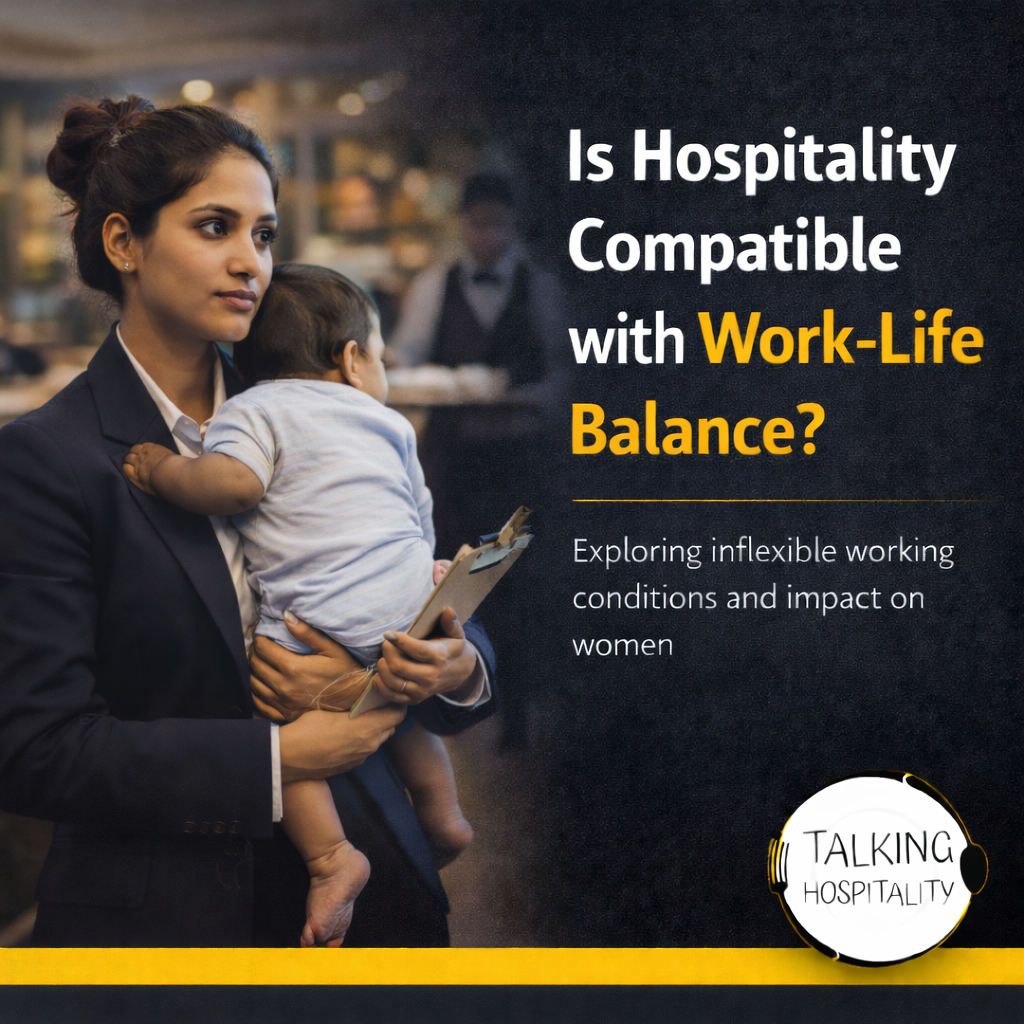
In recognition of International Women’s Day, we are continuing a series exploring the key issues women identify within hospitality.
One theme appears consistently across research, exit interviews and leadership conversations:
Work-life balance.
Hospitality operates on evenings, weekends, peak seasons and public holidays. That rhythm is fundamental to the sector. But when combined with caregiving responsibilities, it creates tension that disproportionately affects women.
The question is not whether hospitality should operate differently.
The question is whether it can operate more intelligently.
The Reality
Hospitality remains one of the UK’s most demanding sectors in terms of working patterns.
According to the Office for National Statistics, women in the UK continue to undertake significantly more unpaid care and domestic labour than men. The most recent ONS time-use data shows women spend, on average, around 60% more time on unpaid care work than men.
The Fawcett Society reports that women are still more likely to reduce hours or leave work due to caring responsibilities, and are more likely to work part-time as a result.
Overlay that with hospitality:
High proportion of shift work
Late finishes
Weekend dependency
Limited predictability
Operational reliance on physical presence
The result is friction.
Research from the Chartered Institute of Personnel and Development (CIPD) shows that flexible working is a key driver of retention across sectors, particularly for parents and carers. Yet hospitality lags behind industries such as professional services and tech in formal flexibility structures.
This is not because hospitality leaders do not care.
It is because the operating model has historically been rigid.
The Career Impact
When flexibility is limited, women in particular have been shown to often respond in predictable ways:
Stepping sideways rather than upwards
Moving to head office or leaving operations
Reducing hours and slowing progression
Leaving the sector entirely
This feeds into the leadership gap discussed in earlier blogs.
It also contributes indirectly to the seniority gap that drives pay disparity.
In simple terms:
If career progression requires constant physical availability at peak times, and caregiving responsibility sits unevenly, progression becomes skewed.
The Myth That Flexibility Lowers Standards
There is often an unspoken fear:
If we introduce flexibility, standards will drop.
But evidence across sectors suggests the opposite.
CIPD research consistently finds that flexible working improves employee engagement, reduces absence and increases loyalty. McKinsey reports that organisations offering flexibility see stronger retention of female talent at mid-career level — the very stage where hospitality loses many women.
The issue is not flexibility versus performance.
It is unstructured flexibility versus well-designed flexibility.
Where Hospitality Is Already Evolving
Change is happening.
Some operators are:
Trialling four-day work weeks for head office roles
Introducing predictable rota windows
Using scheduling software to give more notice
Offering job shares at management level
Supporting phased returns from maternity leave
Expanding shared parental leave awareness
Large groups required to publish Gender Pay Gap data are increasingly linking flexibility to retention strategy.
Technology also plays a role. Workforce management platforms allow smarter scheduling and greater transparency around shifts. That doesn’t remove peak periods — but it reduces unpredictability.
The industry is not static but progress is uneven.
The Commercial Case for Change
Hospitality continues to face recruitment and retention pressure.
Replacing experienced managers is expensive. Training new talent is time-consuming. Institutional knowledge matters.
If mid-career women leave because flexibility feels impossible, businesses lose:
Leadership pipeline
Operational expertise
Cultural stability
Return on development investment
Flexibility is not a perk.
It is a retention strategy.
What Practical Flexibility Looks Like
This does not mean every role becomes hybrid.
It means ask better questions.
1. Predictability Over Perfection
Can rotas be released further in advance? (Predictability reduces stress more than total flexibility)
2. Output-Based Leadership
Are senior roles measured by hours present or outcomes delivered?
3. Shared Responsibility Culture
Is shared parental leave actively encouraged and normalised?
4. Structured Return Pathways
Are there formal return-to-work plans after maternity leave?
5. Shift Swapping Without Stigma
Do teams feel safe requesting changes without penalty?
Small structural changes compound.
The Cultural Question
At its core, this is about how leadership is defined.
If leadership is synonymous with constant availability, women carrying disproportionate caregiving load will always face additional friction.
If leadership is defined by accountability, clarity and output, flexibility becomes possible without compromising standards.
The sector is not being "soft" by adapting. A ridiculous, outdated notion at best. Rather it is modernising, as indeed it must if it is truly to become an employer of choice in the future.
The Balanced View
Hospitality will never be a nine-to-five industry.
Nor should or can it be.
But acknowledging that structural patterns affect people differently is not weakness. It is operational maturity.
When businesses design work with real life in mind:
Retention improves
Leadership pipelines widen
Burnout reduces
Performance stabilises
And that benefits everyone.
Talking Hospitality exists to share real experiences, practical learning, and honest conversations that help hospitality professionals lead better, work smarter, and look after themselves and their teams.

Host & Founder
Timothy R. Andrews has spent over two decades in hospitality. He founded and led a successful recruitment and training business for luxury four- and five-star markets before moving into senior talent leadership roles. Through the podcast Timothy focuses on credible voices, lived experience, and learning that can be applied immediately, giving back to the industry.

Finding Meaning at Work, Even When the Job Feels Dull