
How Climbing a Mountain Changed the Way I Thought About Life's Priorities
Sometimes you think you’re saying yes to a challenge.
Only later do you realise you were saying yes to a turning point.
That’s what comes through so clearly in Paul Cook’s story. What begins as a casual conversation in a pub about climbing Mount Kilimanjaro slowly becomes something much bigger. Not a bucket-list tick. Not a physical challenge for the sake of it. But a process of stripping things back and seeing life, work, and purpose more clearly.
When you don’t realise you’re at a crossroads
Paul doesn’t set out to change his career. He isn’t chasing reinvention. At the time, he’s running businesses, working in insurance and events, juggling projects, doing what many experienced professionals do. He’s functioning, succeeding, and getting on with it.
The decision to climb Kilimanjaro feels almost incidental. A friend suggests it. A beer is bought. A decision is made quickly. Training begins. Flights are booked. It all feels manageable. Logical, even.
What’s striking is how familiar that moment feels. How often do we make decisions thinking they’re contained, only to discover later that they quietly unlock something much deeper?
The power of being taken out of your usual environment
One of the most revealing parts of Paul’s story is what happens when he arrives in Tanzania. There’s no email. No signal. No background noise from work. Just a clear task. Get up the mountain. Get back down safely.
That simplicity matters.
In hospitality, and leadership more broadly, we rarely give ourselves that kind of space. We’re surrounded by constant input. Messages. Decisions. Other people’s needs. There’s little room to hear what’s going on underneath.
On the mountain, there’s no distraction. The routine is basic. The pace is slow. The instruction is constant. Pole pole. Slowly. Trust the guides. Follow the process.
It’s not dramatic. It’s disciplined.
Trust, humility, and invisible work
Paul speaks with deep respect about the guides and porters. People who live on the mountain. People whose expertise is unquestionable, even though their work often goes unseen or under-acknowledged.
They carry the weight. Literally and metaphorically. They set the pace. They make the camp. They clap the group in each night. They create safety and momentum for everyone else.
For anyone who has worked in hospitality or events, this resonates immediately. The invisible roles. The people who make things work quietly. The ones who show up early, leave late, and rarely get the spotlight.
Being on the mountain sharpens Paul’s awareness of that. It reframes leadership as something collective, not individual. Something built on trust rather than ego.
Summit night and the moment everything strips away
Summit night is where bravado disappears.
Extreme cold. High winds. Thin air. Physical sickness. Emotional exhaustion. Paul describes losing control, collapsing, crying, and being physically sick. Not in a dramatic, cinematic way. In a very human one.
What gets him through isn’t willpower in the usual sense. It’s something quieter. Trust in the guide. Encouragement from the group. A decision to keep taking the next smallest step.
This part of the story matters because it challenges the myth of resilience as toughness. What carries Paul forward isn’t forcing himself through pain. It’s support, structure, and being in the right place in the group.
That lesson lands hard for leaders who believe they have to hold everything together on their own.
Clarity often arrives after the hardest part
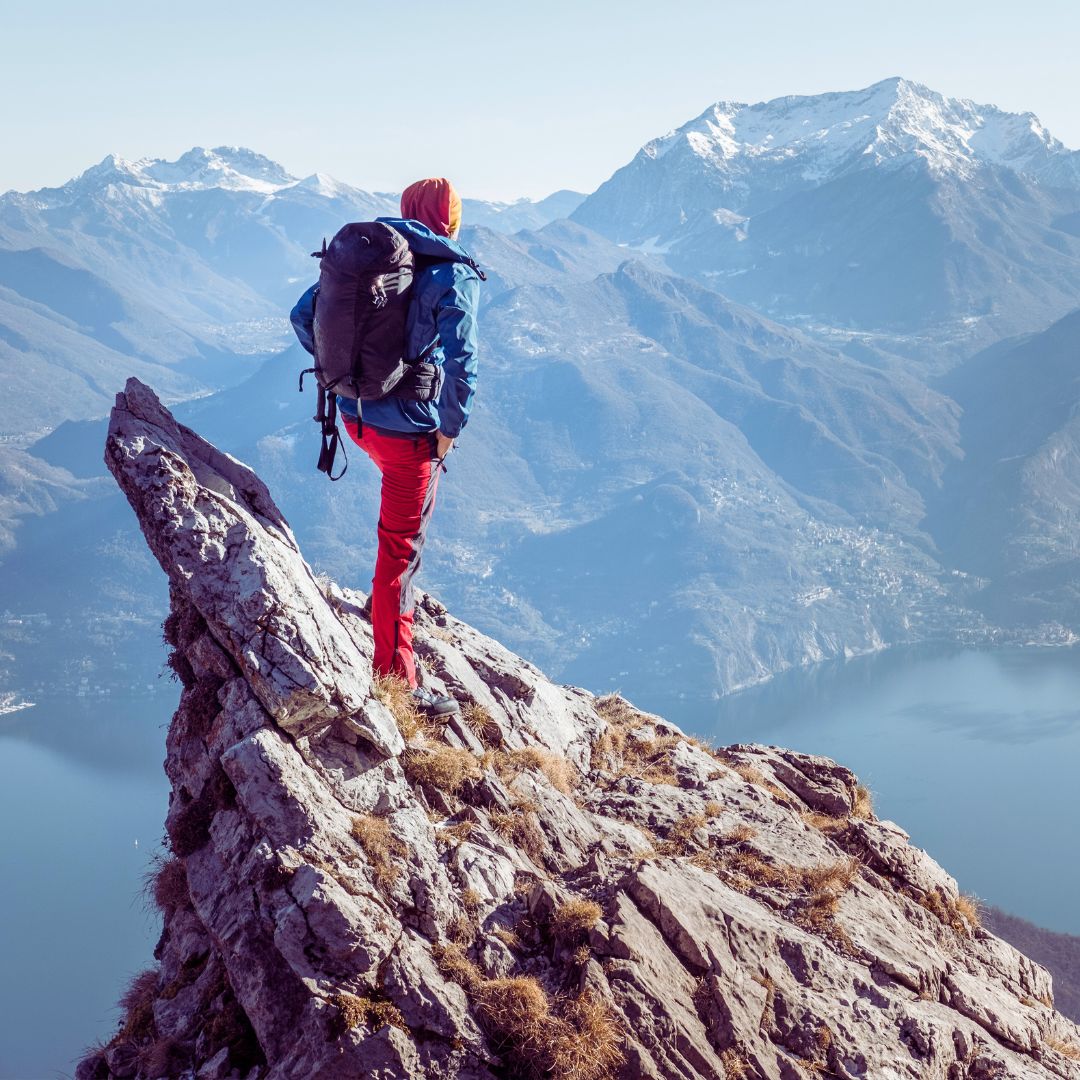
When Paul reaches the summit, the noise stops. The sun comes up. The wind drops. The perspective changes.
What follows isn’t euphoria in the way people expect. It’s clarity.
On the way down, he knows something has shifted. He knows he can’t go back to his old working life in the same way. Insurance no longer fits. The material clutter of life feels irrelevant. Creative work, writing, events, and storytelling start to feel more aligned.
Importantly, this clarity doesn’t arrive because he chased it. It arrives because he put himself somewhere that stripped everything else away.
What this means for leaders now
Not everyone needs to climb a mountain. But many people in hospitality and leadership roles recognise the feeling Paul describes. The sense that you’re functioning but not fulfilled. That you’re busy but not aligned. That something needs to change, even if you can’t yet articulate what.
Paul’s story reminds us that:
Change doesn’t always begin with dissatisfaction
Space and simplicity can reveal what constant activity hides
Trusting others doesn’t make you weaker as a leader
Respect for unseen work changes how you lead
If you don’t love something enough, leaving is sometimes the most honest decision
That’s not recklessness. That’s responsibility to yourself.
The quiet takeaway
This isn’t a story about climbing Kilimanjaro. It’s a story about paying attention.
About listening to what emerges when the noise drops. About recognising when a chapter has ended. And about having the courage to choose work that reflects who you are now, not who you used to be.
For many hospitality leaders, that question is closer than they think.

Host & Founder
Timothy R. Andrews has spent over two decades in hospitality. He founded and led a successful recruitment and training business for luxury four- and five-star markets before moving into senior talent leadership roles. Through the podcast Timothy focuses on credible voices, lived experience, and learning that can be applied immediately, giving back to the industry.
Why Are Women Still Under-Represented in Hospitality Leadership?